Words to be Heard
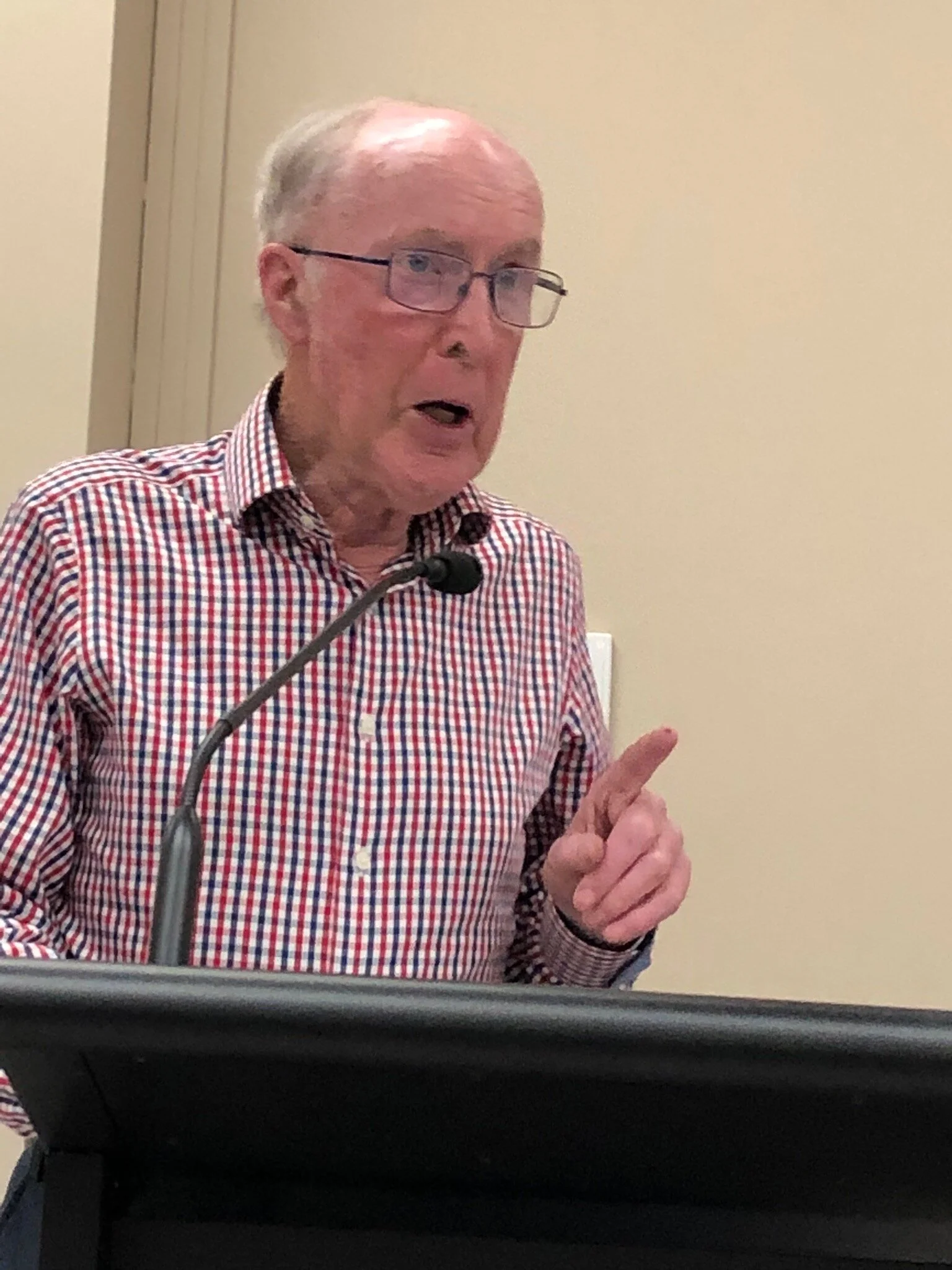
I was delighted when it was announced that Bill Bunbury was to give the annual History Council WA lecture this year. I have always been a “fan” (if that’s an appropriate choice of word) of Bill’s work dating back to the early 1990s.
I was fortunate, as part of my studies in Public History at Murdoch, to secure a placement with Bill at Radio National for a semester. But even before that – and the main reason I requested this placement – I would regularly listen to the Sunday broadcasts on Radio National of Bill’s oral history programs that were one of the important inspirations for me to pursue history.
Working with and sitting alongside Bill as he composed his oral history programs in preparation for broadcasting was both a delight and intellectually stimulating. And they were compositions. Once the interviews were done, there was the layering of the interviews with music, ambient sounds and his narration and hours of research that went into appropriate selections of music, finding the right grabs and the hook for the program, often so well encapsulated in his evocative titles such as Reading labels on jam tins, Rabbits & spaghetti, Rag, sticks & wire. This additional layering and intervention was not just peripheral or dressing; it was how Bill was able to transport his listeners to these places - to these living rooms and forests, and to these times - and what has made Bill’s work unique. It is no wonder he is regarded as Australia’s best-known oral historian, master storyteller and broadcaster.
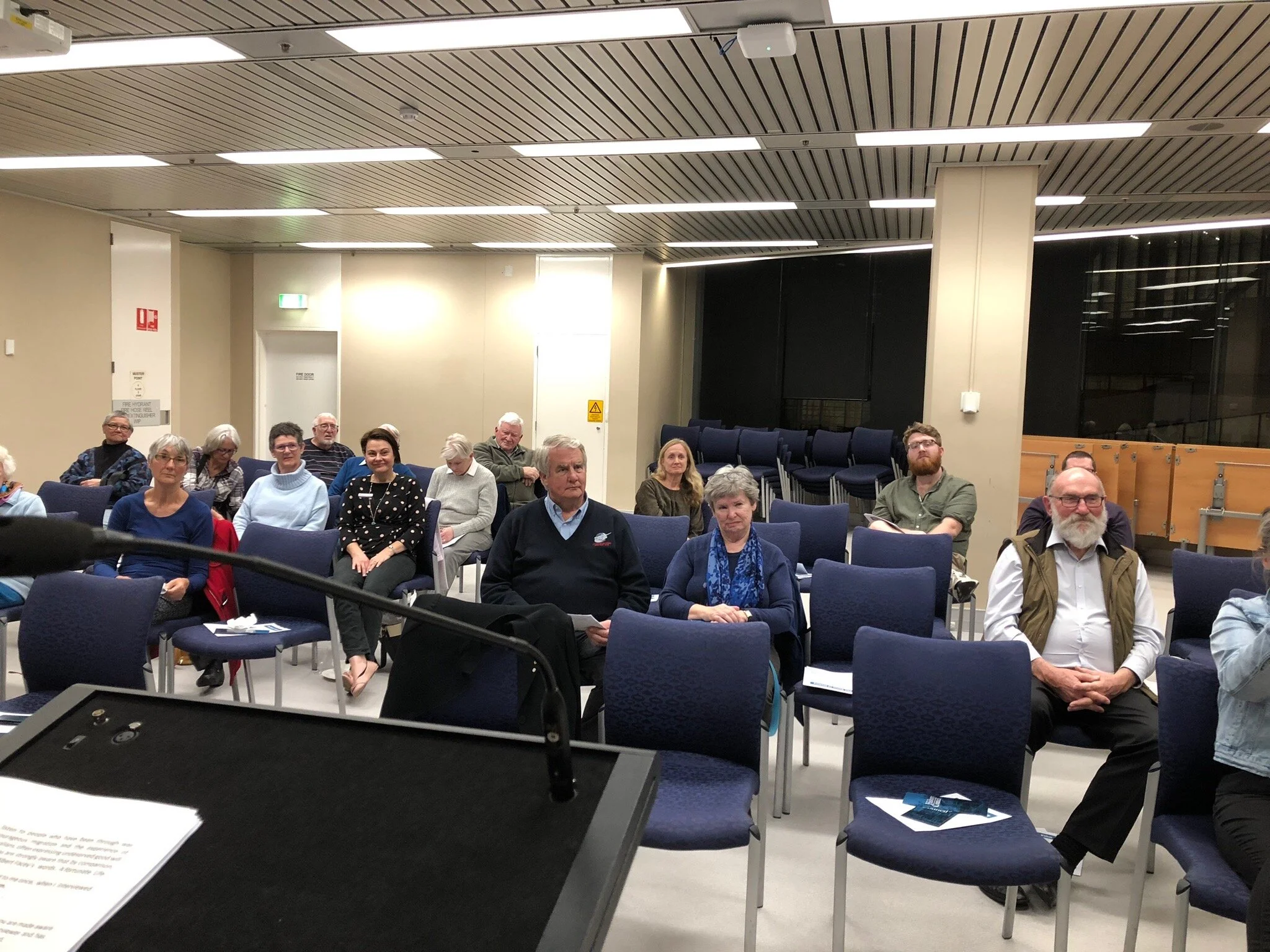
Listening again to his work through the grabs he played at the lecture took me straight back to that dimly lit radio studio. But as well as that, and I think I can speak for everyone there, it also transported me to so many other places and moments.
Bill reflected on his move from television to radio because he wanted to work in a more ‘visual medium’ which drew surprised reactions at the time from his colleagues. What Bill showed us through talking about his processes and playing examples of his work was just how visual the experience of listening is. It reinforced the importance of moment and place in triggering memory and creating atmosphere. He described it as ‘language evoked by site’; how you can achieve a completely different reaction and tone from the person you are interviewing simply by changing the location or by being in-situ where ambient sounds influence responses and thoughts. The experience of many oral historians is often interviewing people in their homes or offices. While there are many practical reasons for doing this, as it creates a controlled environment with minimal distractions and background noise, that is almost the opposite of what Bill seeks out. Admittedly we don’t always have the time, support or equipment to manage this approach, but it is so important to bear in mind. One example Bill shared was that even if you are interviewing someone in their home, by going to a place together where an event happened then interviewing them after that experience can significantly change the mood of the interview, their recollections and recall.
Bill encapsulates what it means to be a social historian, interviewing and listening to men and women who’ve lived through significant experiences and then sharing those recollections with a wider audience. He reminded us about how important it is not jumping on the obvious theme or subject matter but to acknowledge that there are many histories and that ‘a history’ can be approached from numerous perspectives. What Bill does with such facility is make history personal, real and accessible. That sense of ordinary people doing extraordinary things in times of adversity. One example he gave was of the Great Depression of the 1930s in which he explored not just the economic impacts and lessons but the stories of human resilience and kindness in dark times and what the other implications of the Depression on everyday life meant to people who were just trying to get on.
What also came out very strongly at the presentation was that Bill is a committed and active environmentalist, and his more recent work has been focused on environmental history - water, landscape, indigenous interactions with country. His recent publication Invisible Country is an environmental history of the South West of Western Australia, and he and his wife, Jenny, are currently writing a sequel: There Are Many Maps — Understanding and Misunderstanding Between Original Australians and Later Arrivals.
Having already notched up 40 years’ experience in radio and television, currently Adjunct Professor History & Communications at Murdoch University, recipient of an Order of Australia Medal for services to Broadcasting and Indigenous Communities and the author of twelve books based on his oral histories, Bill is showing no signs of slowing down. Clearly too, neither is his wife Jenny who is definitely the woman beside (not behind) the man as they collaborate on these projects together. His body of work is and will always be an important and significant legacy not just as a parochial Australian history, but much more than that by putting our history and stories in the context of global issues, concerns and actions and within the global community.
Helen Munt